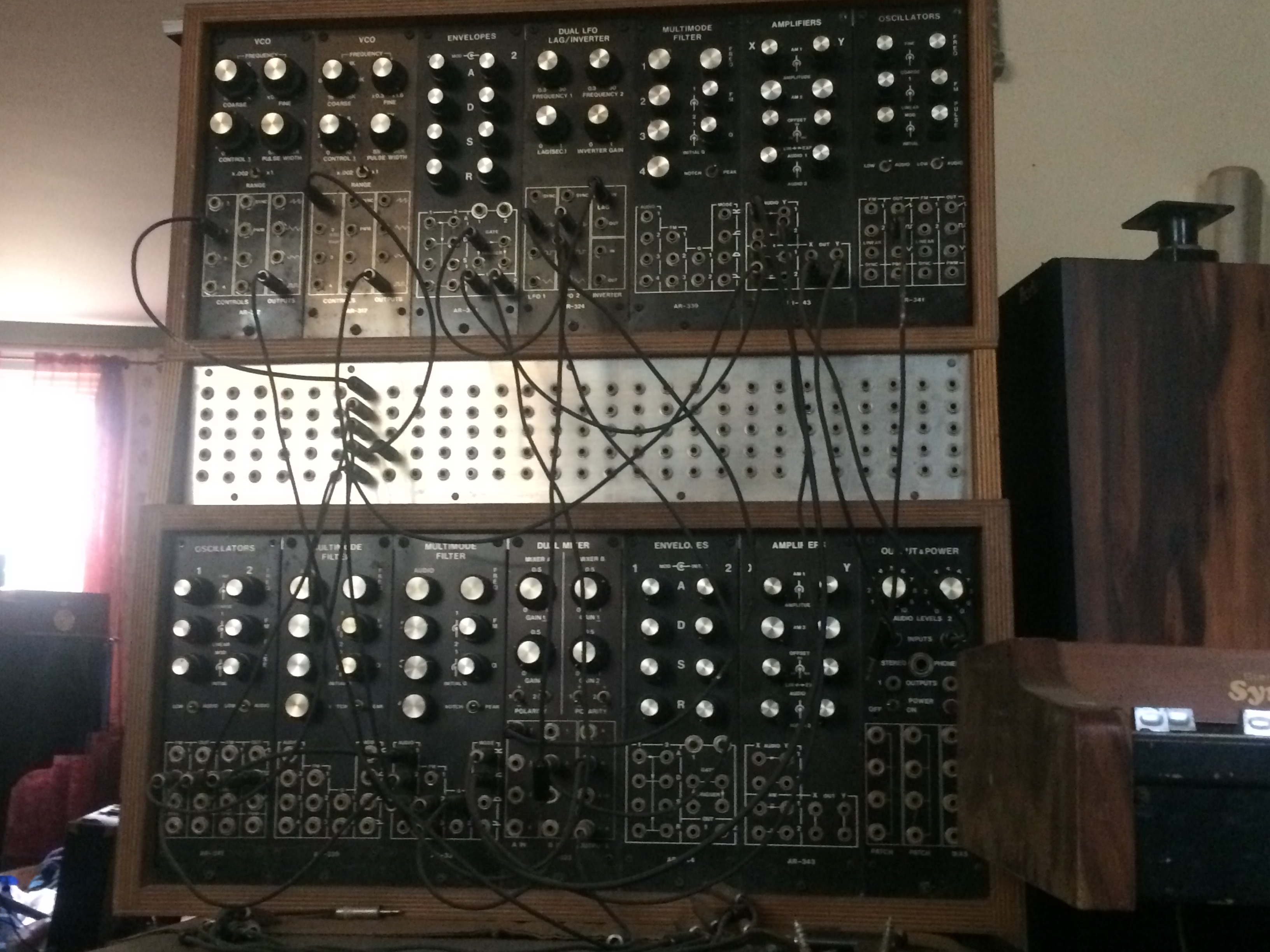
Aries System 300

Old circuits, kept running.

Triangulum Research began with an Aries System 300 rescued from a dumpster. It has grown into a working archive of that instrument: restoration notes from the bench, the factory manuals and schematics as scanned PDFs, and new modules designed in the same spirit.

35+ manuals and schematics preserved
8 restoration and build logs
1 rescued Aries that started it all
Aries System 300 in a walnut cabinet
Aries System 300, restored
AT-327 multimode filter panel
AT-327 multimode filter

Documentation, bench notes, and new hardware.

Documentation

The Aries service library, preserved.

Factory manuals, module schematics, and the 1975–1978 catalogs, scanned and organized by purpose. If you are repairing an Aries, start here.

Journal

Restoration and build notes from the bench.

What actually happened during the System 300 restoration: component sourcing, filter repairs, faceplate production problems, and demo recordings along the way.

Instruments

New modules in the Aries tradition.

The AT-327 multimode filter revives the rare AR-327 design as a new instrument, prototyped, demoed, and documented here as it develops.

Start where the material is strongest.

About Triangulum

How a synthesizer pulled from a dumpster became a decades-long repair practice, and why the project is named for the constellation next to Aries.

Resource archive

Owner's manuals, module schematics, factory catalogs, and the best external Aries references, grouped so you can find the document you need.

Restoration journal

The build log in order: restoration milestones, filter prototypes, board revisions, and module demos.

Three entries to start with.

See the full journal

Aries System 300 Restoration

The full restoration: new Switchcraft jacks, NOS switches and potentiometers, a rebuilt wiring harness, and a repaired multimode filter.

A Video Demo of the AT-327

The AT-327 multimode filter prototype on video: what the revived AR-327 design sounds like in practice.

Have an Aries on your bench?

Corrections to the documentation, scans of material missing from the archive, and repair questions are all welcome.

Get in touch